The Scenic Line Is Not Always the Longest One
A scenic route is not simply the longest or most famous one. Compare its changing landscapes, what you can actually see from the train and the demands of the timetable.
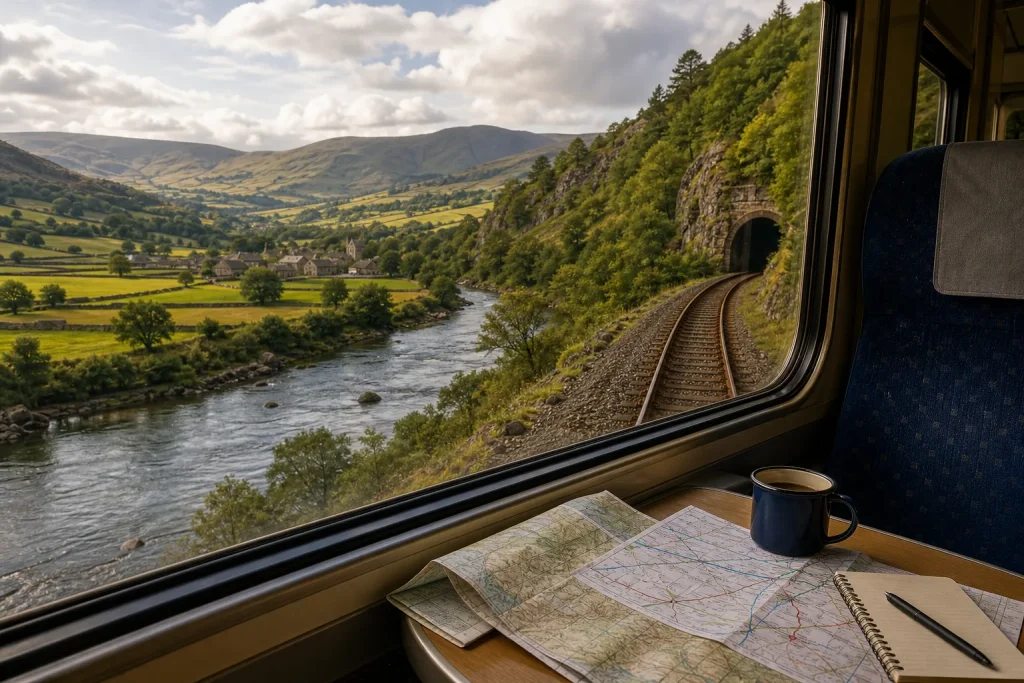
A long railway route can offer less variety than a short branch. What matters is not how much ground the train covers, but what the journey passes through and whether the scenery is visible from the carriage.
Landscape changes
A map can make a detour look promising. It can also disguise a long stretch of much the same country. Mark the changes you would enjoy: coast to farmland, valley to upland, or town to open country. Compare a railway map with a physical map, then trace the line itself. Railways may follow rivers, slopes or older corridors rather than the direct course a road takes.
Describe each route in plain nouns: coast, woodland, estuary, fields, stations. A sequence of different settings may suit you better than a longer crossing of one broad landscape. But if that broad landscape is precisely what you want, variety is not a virtue for its own sake.
Views from the train
A line near a river does not necessarily provide a clear view of it. Trees, buildings, cuttings and tunnels can hide features that look close on a map. A topographic map helps show whether the track follows a slope, drops into a valley or crosses a ridge, but it cannot settle every question about what a passenger will see.
Treat station names and tourist descriptions as clues, not promises. Look for more than one appealing stretch rather than relying on a single celebrated landmark. It is not worth trying to identify the best side of the train from a route map alone: curves, direction and carriage arrangements make that guess unreliable.
Reputation and detail
A famous scenic line may be a poor fit if its landscape is not the one you want. Translate broad descriptions into specifics. Does the route follow a coast, cross moorland, pass through farmland or link small industrial towns? Does it alternate open country with built-up places, or spend much of the ride in one setting?
Read a route description with a map beside it. Notice which features recur and where they lie. If the account centres on one bridge or viewpoint, ask what fills the rest of the ride. The ordinary stretches matter more than a landmark that occupies only a brief passage.
Timetable demands
A slower train, a change or a limited service may shape the day as much as the landscape does. Check the current timetable for the service you intend to take. Note where you change, whether the departure suits your plans and which sections that train actually covers. A railway map shows the line, not necessarily the pattern of a particular service.
Imagine you are choosing between a direct train across a broad agricultural plain and a shorter branch that follows a river before climbing through a wooded valley. You want varied scenery, but the branch requires a connection that leaves little room for a missed train. The direct route offers fewer landscape changes but no transfer. Your decision turns on the trade-off: choose the branch if its timetable gives you a connection you are comfortable with; otherwise take the direct train and accept the steadier view. In either case, check the operator’s current timetable and planned service changes before booking.
Useful comparisons
- Landscape variety: Check whether the route description and map show distinct settings. If they do, choose it for variety; if not, choose it only if its single landscape appeals to you.
- View access: Check for tunnels, cuttings, tree cover or buildings near the feature you hope to see. If these may obstruct the view, treat that feature as uncertain and choose a route with other scenery you would enjoy; otherwise, keep it as one of the route’s attractions.
- Time in the setting: Check whether the appealing stretch forms much of the ride or only a short section. If it is brief, do not let it carry the whole decision; if it recurs or lasts through the journey, give it more weight.
- Train pattern: Check which sections your chosen service actually covers. If it omits the stretch you want, select a different departure or route; if it includes it, compare the remaining journey as well.
- Connection: Check where you change and whether the planned connection feels manageable for your circumstances. If it feels too tight, choose a direct service or another departure; if it suits your plans, weigh the landscape against the added transfer.
- Journey purpose: Check whether you want scenery during the ride or transport to a destination. If the destination is the main aim, choose the service that fits the day; if the railway journey is the point, prioritise the route itself.
Choosing the journey
When two routes remain close, compare their ordinary middle stretches rather than their most famous moments. Ask which one you would be content to sit through at the pace you want. A direct train can leave more attention for the view; a change may be worthwhile when the railway itself is part of the attraction and the connection fits your plans.
Separate the journey from the destination, too. A route ending in an appealing town may make a good day out without making every mile especially interesting. Choose the service for the day you actually want, and check its current timetable before setting off; scenic intentions have a habit of meeting the platform display.
Another stop nearby
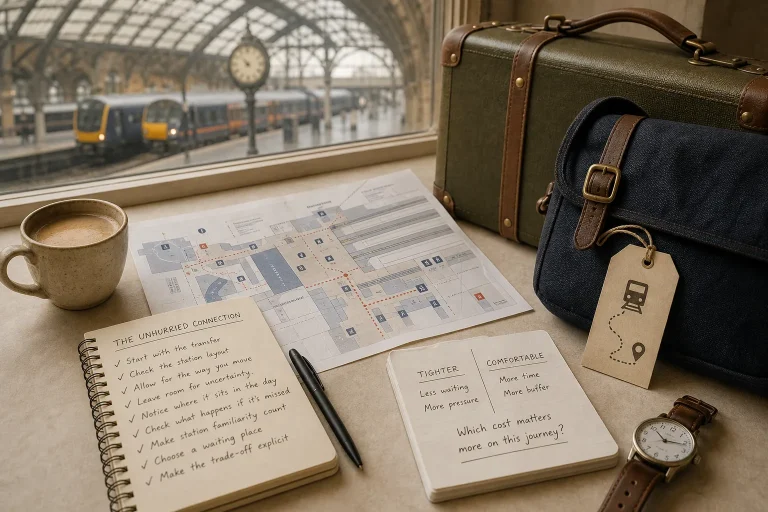
The Unhurried Connection: Leaving Space Between Trains
A comfortable rail connection is not simply a long wait. Match the gap to the station,…
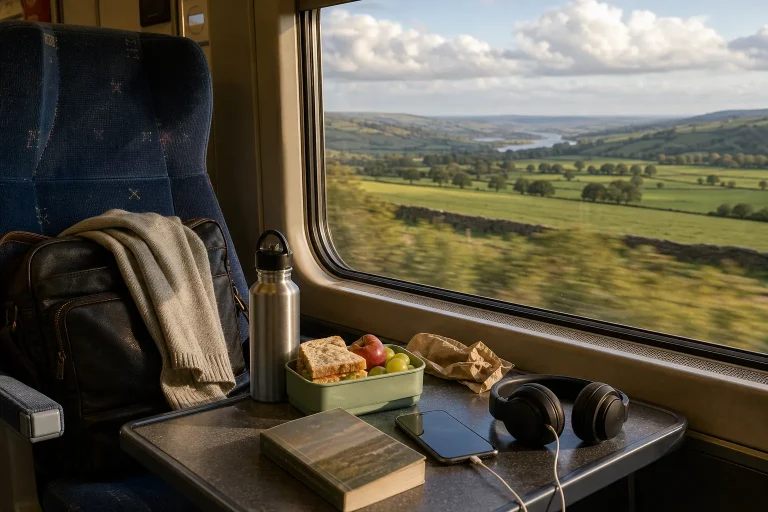
A Long Ride Without a Packed Schedule
A fictional journey shows how a few gentle anchors—food, rest and looking out—can give a long…